
Our Project
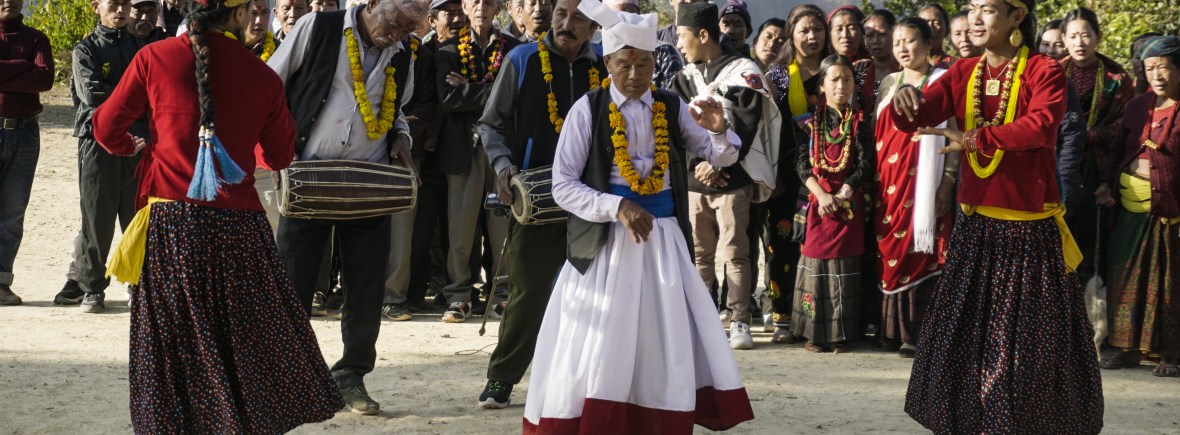
Subi Shah (1922-2008) spent his life performing and teaching Nepali folk song, instrumental music, dance, and drama. He specialized in performing dance-dramas like Sorathi and Charitra. His books give a holistic account of how the arts of song, music, dance, and drama are interlinked in these traditions.
His audio recordings and recordings of songs he collected represent the folk music of Central Nepal, especially around his home area of Jyamrung village in Dhading district.
Project Website: www.pangduredance.wordpress.com

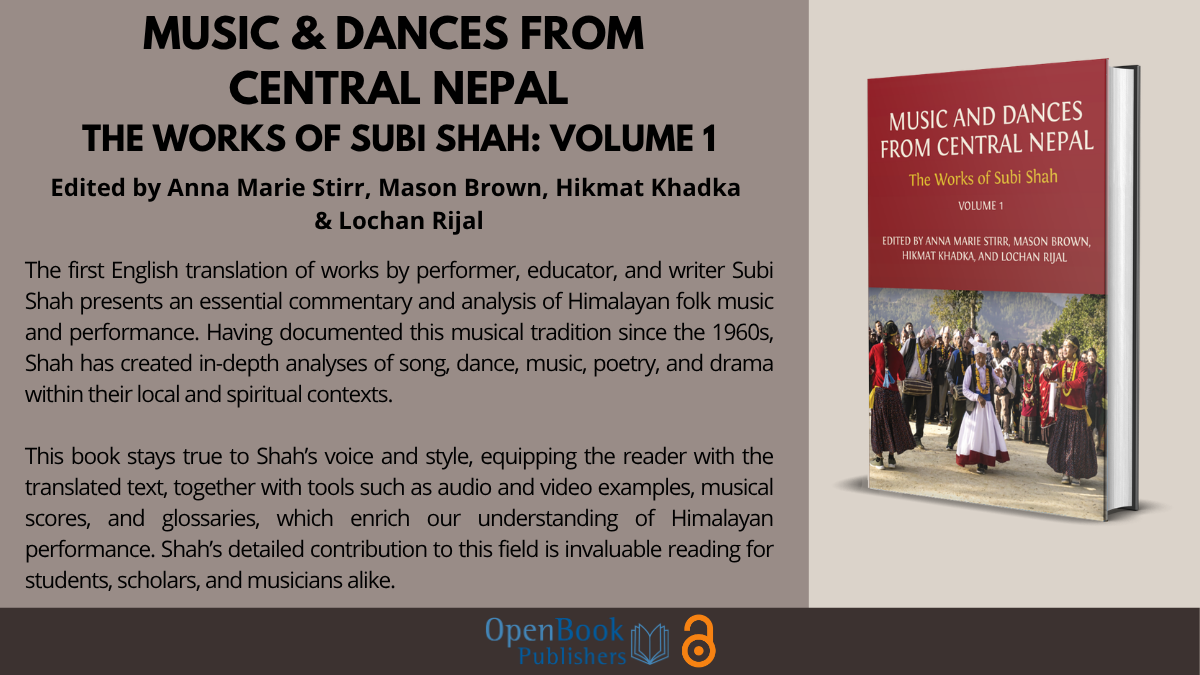
Music and Dances from Central Nepal: The Works of Subi Shah is a critical edition and translation of six of Subi Shah’s works on Nepali folk music, combined with music and dance notation, plus audio and video recordings of the genres discussed therein.
In these two volumes, performer, educator, and writer Subi Shah presents an essential commentary and analysis of Himalayan folk music and performance. Having documented his musical tradition since the 1960s, Shah has created in-depth analyses of song, dance, music, poetry, and drama within their local and spiritual contexts. Shah’s detailed contribution to this field is invaluable reading for students, scholars, and musicians alike.
Music and Dances from Central Nepal is the first English translation of Shah’s works. This collection includes three published works— Madal, “Pangdure (Maruni) Folk Dances”, and Glimpses of Nepali Folk Songs—and three unpublished manuscripts— Introduction to Nepali Tunes, Sorati, and Basic Theory of Folk Dance.
These volumes stay true to Shah’s voice and style, equipping the reader with the translated text, and tools such as audio and video examples, musical scores, and glossaries, which enrich our understanding of Himalayan performance.
In keeping with Shah’s intentions to make his work available to all, and to keep these traditions of Himalayan folk music and performance alive, these highly accessible translations will be a valuable resource for a larger readership to explore this field. In doing so, this book makes an effort to decolonise ethnomusicology through the promotion of a Nepali artist’s theories and analysis within a Himalayan tradition.
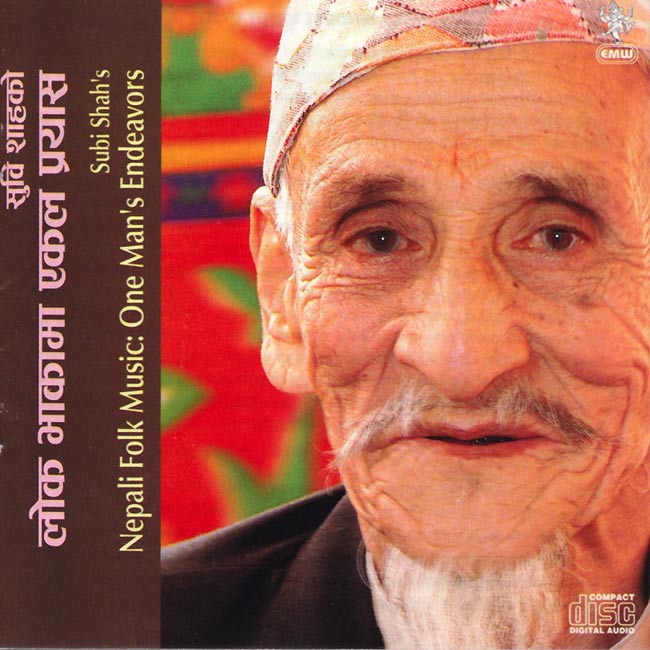
Subi Shah (1922-2008) was a Nepali performer and educator whose life’s work was to preserve and promote Nepali folk genres of music, song, dance, and drama, especially the wide variety of these that make up the tradition known as Pangdure or Maruni. Raised in this tradition, he became one of its leading exponents, first as a performer in his village, then as a member and later leader of the Royal Nepal Army’s performance troupe, and finally as a K-12 educator and cultural policy consultant from his Army retirement until his death in 2008. Although he was consulted and honored by state cultural policymakers, and collected many songs, his works are scattered and many of his contributions remain unrecognized.
This project continues his aim of sharing his tradition with the widest audience possible by translating his books (published and unpublished) into English, and supplementing his notated musical examples with audio and video recordings of performances whenever possible.
Unusually for scholarship on Nepali folk traditions, Subi Shah’s books approach them as more than folk literature or social rituals. His studies cover musical aspects of melody and rhythm, relating them to song words, poetic meter, and dance steps, as well as acknowledging their importance as folk literature and social action.
His detailed work offers a major opportunity to understand the folk performance traditions of Sorathi, Charitra, Khyali, Jhyaure, Chudka, and more, as performed in central Nepal, especially in his home village of Jhyamrung in Dhading.
“Glad to see you are valorizing the holistic nature of performance in most of Asia, which challenges our bounded categories of music, dance, and theatre.”
Ric Trimillos, Professor Emeritus of Ethnomusicology, UH Manoa

This project has been made possible in part by a major grant from the National Endowment for the Humanities: Democracy demands wisdom.
Any views, findings, conclusions, or recommendations expressed in our translation and critical edition do not necessarily represent those of the National Endowment for the Humanities.
 Anna M Stirr, Ph.D.
You must be logged in to post a comment.